Exploring the Important Function of Casting Foundry in Modern Production
Casting foundries are essential in contemporary production, offering important elements across diverse markets. Casting Foundry. Their capability to produce detailed, light-weight components satisfies the expanding demands for efficiency and high quality. However, the landscape is evolving, influenced by technological innovations and sustainability concerns. As these shops navigate obstacles and chances, their future duty in production stays uncertain. What techniques will they employ to flourish and adapt in this vibrant environment?
The Basics of Casting: Understanding the Process
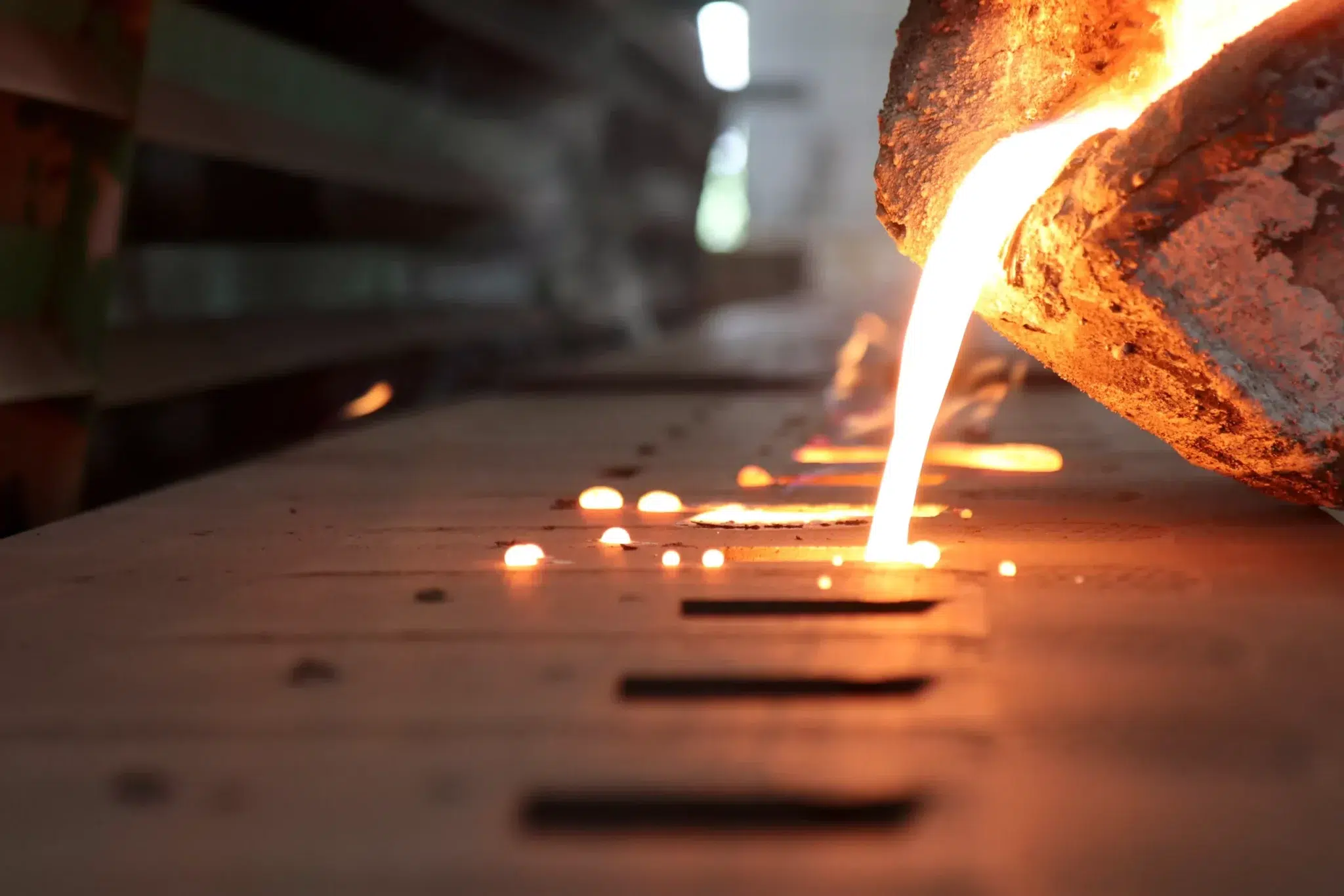
Casting has actually been a fundamental manufacturing process for centuries, its principles remain crucial to modern-day sector. This process involves pouring a fluid product, typically metal, right into a mold to create a details form. The mold is created to develop the preferred output, which strengthens as it cools. Key stages in casting consist of pattern making, mold production, pouring, and completing. Each phase calls for careful attention to detail, making certain that the end product fulfills quality and dimensional standards.
The adaptability of Casting enables the production of intricate geometries that would certainly be hard or difficult to attain via various other manufacturing methods. Additionally, Casting can suit a selection of materials, including polymers and steels. This adaptability makes it an essential strategy for markets varying from automobile to aerospace, supporting development and efficiency in the production of elements that satisfy the needs of modern applications.
Kinds Of Casting Strategies and Their Applications
Casting methods are varied, each tailored for particular applications and material demands. Sand Casting is among the earliest methods, ideal for intricate geometries and big components, making use of sand mold and mildews. Investment spreading, recognized for its accuracy, is perfect for elaborate layouts and is frequently utilized in aerospace and medical sectors. Pass away spreading, commonly utilized for high-volume production, permits fast production of smaller sized components with great surface finish, generally in light weight aluminum or zinc alloys. Shell Casting provides an equilibrium in between the two, giving fine details and excellent toughness, making it popular in auto applications. Long-term mold and mildew casting, made use of for non-ferrous metals, supplies a tighter dimensional tolerance and better mechanical residential properties. Centrifugal Casting is effective for developing round components, usually located in tubes and pipes. Each technique serves distinct purposes, emphasizing the adaptability and value of Casting in modern production
The Influence of Casting Factories on Industry Technology
As industries venture for greater effectiveness and product quality, the duty of casting factories becomes increasingly crucial in driving technology. These centers offer as the foundation for creating complex elements across various industries, including auto, aerospace, and energy. By leveraging sophisticated Casting techniques and materials, foundries contribute to the growth of lighter, more powerful, and much more long lasting products that meet developing consumer demands.
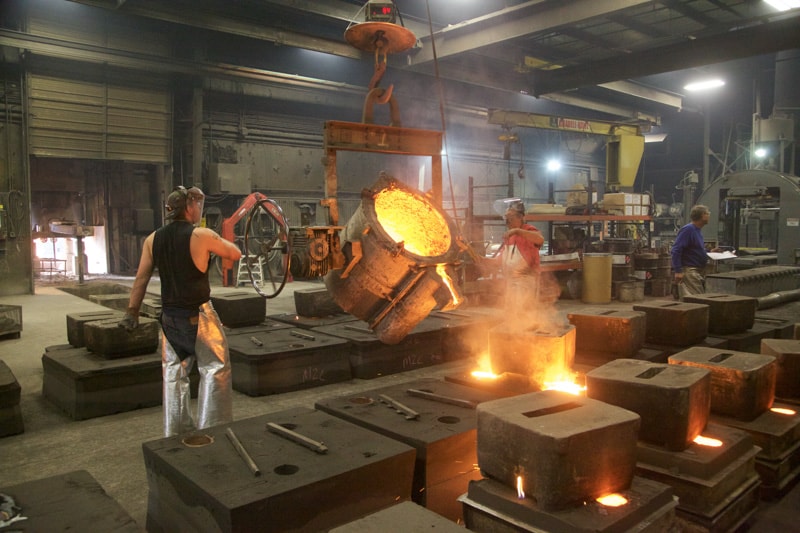
In addition, factories facilitate making use of sustainable methods, such as reusing metal and lessening waste, which aligns with modern-day industry criteria for environmental duty. Inevitably, the cutting-edge capabilities of casting factories not just enhance manufacturing effectiveness however also thrust whole industries right into a future characterized by technological advancement and sustainability.
Difficulties Encountering Casting Shops in a Modern Economic situation
While advancement continues to reshape the production landscape, casting shops face a myriad of difficulties that intimidate their operational practicality. One considerable issue is the boosting competitors from advanced production technologies, such as additive production, which can create complicated get rid of less material waste. Additionally, the fluctuating rates of resources, particularly steels, position economic threats, influencing price predictability. Labor lacks even more worsen these obstacles, as experienced workers become harder to discover and maintain amidst an aging labor force. Additionally, regulative pressures regarding exhausts and office safety and security call for foundries to spend in costly upgrades, typically stressing minimal resources. The need for digital makeover also impends large, as numerous foundries struggle to take on Sector 4.0 modern technologies that boost efficiency and information management. Jointly, these difficulties force casting shops to adjust promptly or run the risk of obsolescence in a progressively affordable market.
Sustainability Practices in Casting Foundries
In the middle of the difficulties challenging Casting foundries, the adoption of sustainability practices has actually become an important method for boosting operational strength and competitiveness. Factories are increasingly concentrating on minimizing waste via reliable source management, reusing scrap metal, and utilizing eco-friendly materials in their procedures. The application of energy-efficient technologies is one more essential facet, as it assists lower power intake and carbon emissions.
Numerous foundries are taking on closed-loop systems to lessen water usage and minimize the ecological impact of operations. Worker training in sustainable practices fosters a culture of environmental duty, ensuring that all group members are taken part in sustainability efforts.
Integrating Innovation in Casting Processes
Incorporating sophisticated technologies right into casting processes has ended up being a critical consider driving efficiency and innovation within foundries. Automation this post and robotics are significantly utilized to simplify production, decreasing labor costs and minimizing human mistake. Advanced software for simulation and modeling enables designers to anticipate end results and optimize designs prior to physical production starts. Additionally, the incorporation of 3D printing innovation considerably these details enhances the prototyping stage, promoting quick development and lowering preparations.
In addition, real-time surveillance systems utilizing IoT gadgets make it possible for foundries to track efficiency metrics and determine prospective issues early in the Casting process. This data-driven technique not only boosts top quality control but likewise sustains maintenance techniques that avoid pricey downtimes. As an outcome, integrating these modern technologies promotes a much more nimble production setting, enabling foundries to react promptly to market demands while preserving high standards of high quality and sustainability.
The Future of Casting Foundries in Production
/zac89290_5050.jpg)
Additionally, the need for high-performance and light-weight materials in markets like aerospace and automotive will certainly drive advancement within foundries. Collaborations in between producers and shops will likely increase, promoting an extra integrated supply chain that emphasizes rapid prototyping and customization. As digital transformation proceeds, foundries might additionally utilize data analytics to enhance procedures and forecast upkeep needs, guaranteeing competitiveness. Eventually, the future of casting factories copyrights on their ability to adjust to technological innovations and market demands while preserving high quality and cost-effectiveness.
Frequently Asked Questions
What Materials Are Generally Made Use Of in Casting Foundries?
The materials frequently used in casting foundries consist of steels such as light weight aluminum, steel, iron, and bronze, along with different alloys. Additionally, sand, resin, and ceramic are frequently made use of for molds and core manufacturing.
How Do Casting Foundries Make Certain Quality Assurance in Manufacturing?
Casting shops implement extensive high quality control measures, including regular evaluations, standard screening, and adherence to industry accreditations. These methods ensure that each item fulfills specified tolerances and efficiency criteria, thereby keeping high levels of read here integrity and consumer fulfillment.
What Are the Precaution in Casting Foundries?
Safety and security actions in casting foundries consist of the use of individual protective devices, proper air flow systems, regular tools upkeep, employee training programs, and adherence to security regulations to decrease risks connected with molten steel handling and equipment procedure.
The length of time Does the Casting Refine Normally Take?
The Casting process commonly takes numerous hours to a number of days, relying on factors such as the complexity of the style, the materials utilized, and the cooling time required for the actors elements to solidify correctly.
What Is the Role of Designers in Casting Foundries?
Designers in casting foundries supervise layout, process optimization, and top quality control. They assure that products fulfill requirements, troubleshoot manufacturing issues, and execute ingenious techniques, eventually contributing to effectiveness and the successful manufacture of metal components.
Casting shops are critical in modern-day production, giving crucial elements throughout diverse markets. While innovation proceeds to reshape the manufacturing landscape, casting shops encounter a myriad of challenges that threaten their functional stability. Amidst the difficulties confronting Casting factories, the fostering of sustainability techniques has actually emerged as an important technique for boosting functional resilience and competition. In enhancement, real-time monitoring systems using IoT tools make it possible for factories to track performance metrics and recognize prospective issues early in the Casting process. The materials commonly used in casting foundries consist of metals such as light weight aluminum, bronze, steel, and iron, along with numerous alloys.
Comments on “Casting Foundry Shifts: What the Future Looks Like for Global Production”